

Pokemon Investing 101 · Episode 1
Are Pokemon Cards a Good Investment? A Beginner's Guide
Are Pokemon cards a good investment? Some are, most aren't. The 3 ways people invest (sealed, singles, graded), what each returned, and the mistake in each.
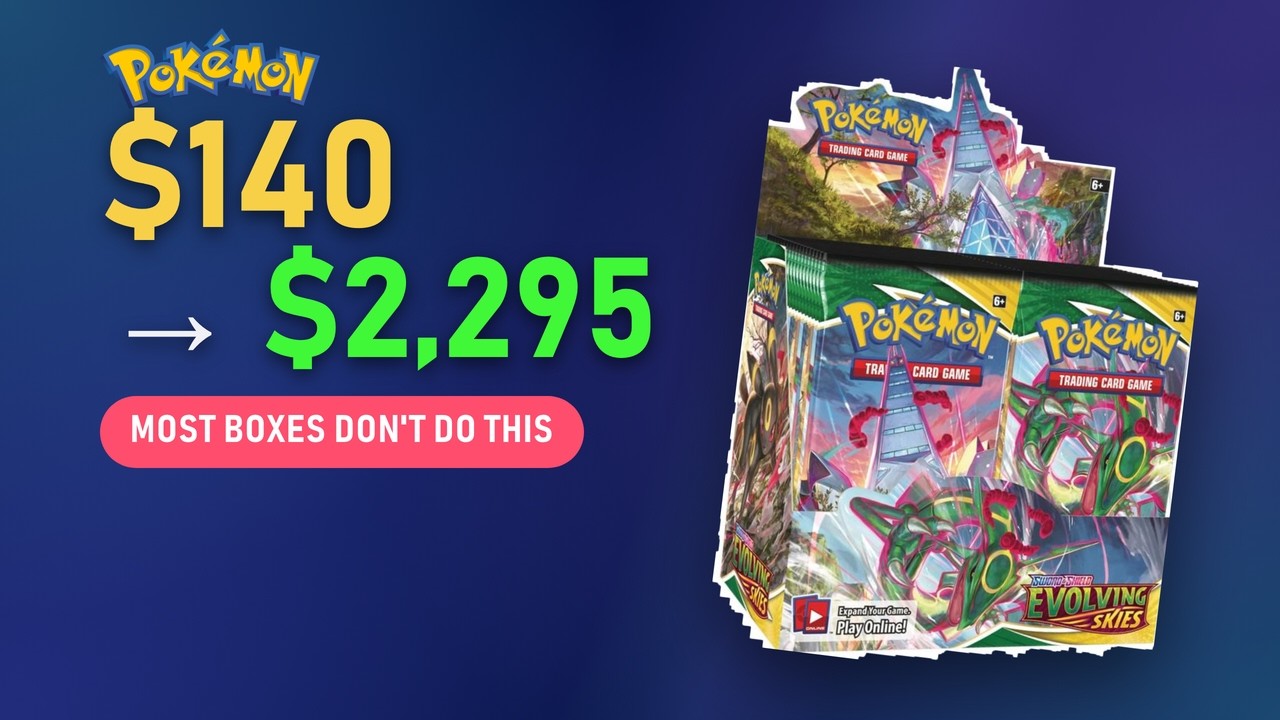
Are Pokemon cards a good investment? Some are, and most aren’t. People put money into Pokemon cards in three ways: sealed product, singles and graded cards. Each one has made money for some buyers and lost money for others, and each has one mistake that does most of the damage. This guide walks through all three with real sold prices, then gives you four steps to start.
This is episode 1 of Pokemon Investing 101, a short series for people just getting into Pokemon cards. Prices below are from when the video was recorded, each with its source, and the latest prices sit beside them. Nothing here is financial advice.
Key takeaways
- Sealed rewards patience and a fair price. It does badly when you buy at the peak of the hype.
- Singles let you buy exactly the card you want. New chase cards are often at their most expensive in their first weeks.
- Graded cards are a bet on condition and on how rare that condition is. Check how many 10s exist before you pay for one.
- Whatever you buy, look up what it actually sold for, not what sellers are asking.
Way 1: sealed Pokemon
Sealed means unopened product: a booster box (36 packs) or an Elite Trainer Box (ETB), a smaller box of packs with accessories. Once a set stops being printed, the boxes that are left get scarcer every time someone opens one.
| Product | Then | At recording | Change |
|---|---|---|---|
| Evolving Skies booster box | $140.61 (Mar 2022) | $2,295.14 | about 16x |
| Destined Rivals booster box | $559.42 (Feb 2026 high) | $367.79 | about 34% less |
Source: PriceCharting monthly sold prices, at the time of recording.
The Evolving Skies box is the best case: roughly sixteen times in about four and a half years. The Destined Rivals box is the warning. Anyone who paid the February 2026 high was down about a third eight months later.
The mistake: buying at the peak of the hype. The rule: buy close to retail, and plan to hold for years.
Way 2: Pokemon singles
A single is one card bought on its own, usually raw, which means not graded. Instead of opening packs and hoping, you buy the exact card you want.
| Card | Then | At recording | Change |
|---|---|---|---|
| Umbreon VMAX 215/203 (Evolving Skies), raw | $220.50 (Sep 2021) | $1,725.00 | close to 8x |
| Pikachu ex 238/191 (Surging Sparks), raw | $392.72 (Dec 2024, first full month) | $249.99 | down 36% |
Source: PriceCharting monthly sold prices (ungraded), at the time of recording.
The Umbreon is the famous success story. The Pikachu is the more common pattern for a new set’s top card: most expensive in its first weeks, then lower once more copies are opened.
The mistake: buying a new set’s top card in its first weeks. The rule: buy the card, not the hype, and let the price settle.
Way 3: graded Pokemon cards
Grading means sending a card to a company like PSA, which checks its condition, scores it from 1 to 10 and seals it in a plastic case. A PSA 10 is a perfect score, and it sells for more.
| Umbreon VMAX 215/203 | At recording |
|---|---|
| Raw | $1,725.00 |
| PSA 9 | $2,100.00 |
| PSA 10 | $3,750.00 |
Source: PriceCharting, at the time of recording.
A PSA 10 Umbreon sells for a bit over twice the raw price. Why only twice? Because 21,904 of the 31,746 copies PSA has graded came back a 10, about 69% (GemRate PSA population, at recording). With graded cards you pay for two things: the condition, and how rare that condition is.
The mistake: paying a big premium for a 10 that isn’t rare, or paying to grade a card that won’t get one. The rule: check how many 10s exist before you buy one.
How to start investing in Pokemon cards
- Pick one lane (sealed, singles or graded) and learn it before you spread out.
- Look up sold prices before you buy anything. PriceCharting and TCGplayer both show what items actually sold for. Episode 2 covers how.
- Buy as close to retail as you can, and skip release-week prices.
- Only put in money you can leave alone for years, because prices fall as well as rise.
FAQ
Are Pokemon cards a good investment? Some are and most aren’t. Out-of-print sealed boxes bought near retail and top cards bought after the hype settled have done well. Product bought at the peak of the hype has often lost value.
What is the safest way to start? There is no safe way, but the lowest-risk habits are the same in every lane: check sold prices, buy near retail, and hold only money you can leave alone.
Is sealed or singles better for beginners? Sealed is slower and depends on the set going out of print. Singles let you buy exactly what you want but move faster in both directions. Pick one and learn it first.
Should I grade my Pokemon cards? Only when the grade would add more than it costs, and only for cards in top condition. Episode 9 covers PSA grading in detail.
Sources
- PriceCharting monthly sold prices and current prices: Evolving Skies booster box, Destined Rivals booster box, Umbreon VMAX 215/203 (ungraded, PSA 9 and PSA 10), Pikachu ex 238/191 (ungraded). Captured for the video. No release-month or preorder prices.
- GemRate PSA population for Umbreon VMAX 215/203: 21,904 PSA 10 of 31,746 graded. Captured for the video.
Not financial advice. Prices move fast, so the latest prices sit beside the ones from when the video was recorded.
Next in Pokemon Investing 101: How to Check What a Pokemon Card Is Worth